
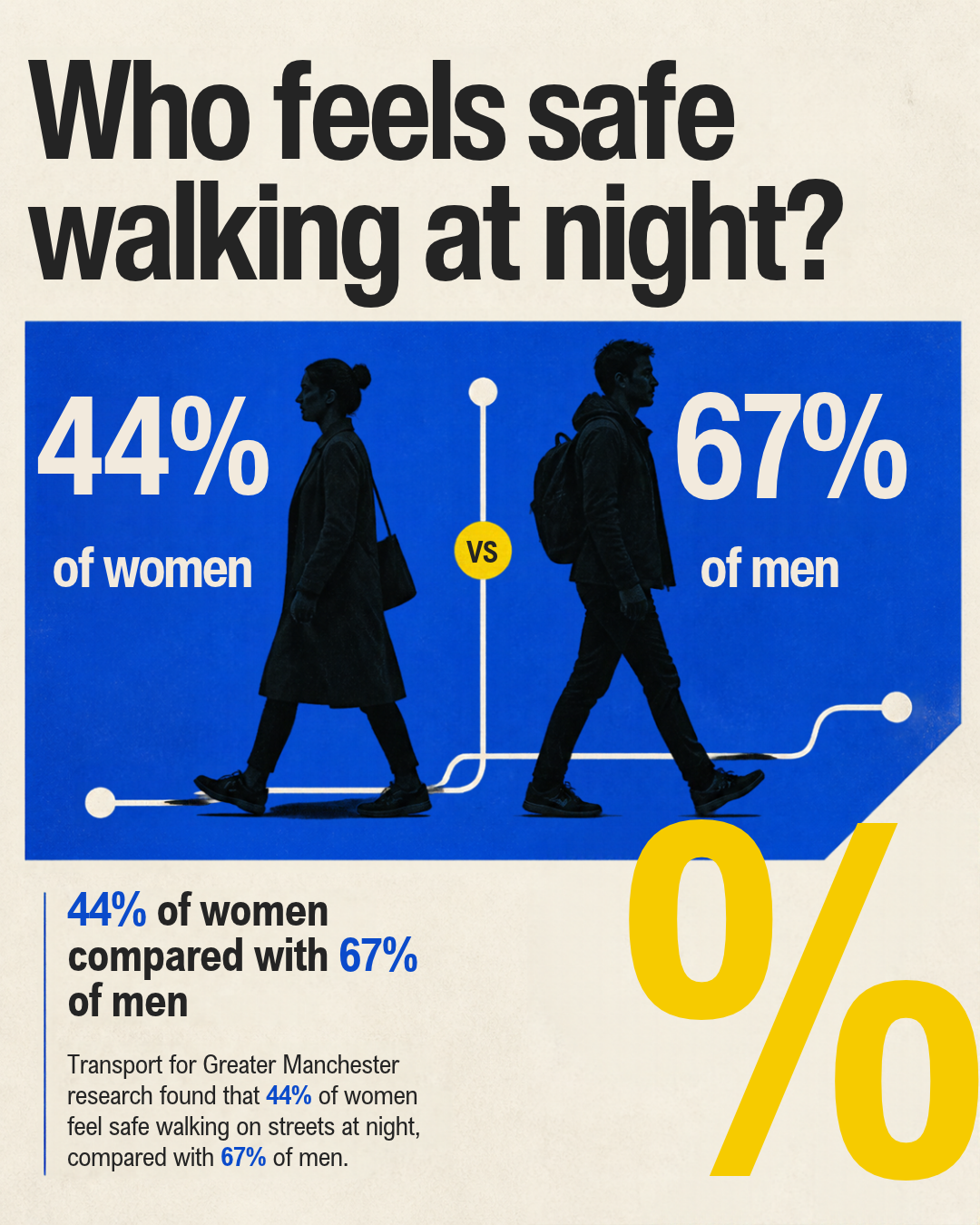
Women travelling across Salford are changing their journeys home as earlier sunsets bring concerns about personal safety, with students altering their routines, extra transport costs and feeling less confident travelling alone.
For University of Salford student, Inge Synman, 21 , who works part-time to help pay her rent, walking home has become increasingly difficult. She says she loves walking but now sometimes uses a scooter or pays for an Uber to feel safer.
“It almost feels like I’ve lost a bit of independence during the winter months because I have to plan my day around when it’s going to get dark,” she said.
The change has also brought additional costs, leaving her frustrated at having to spend money on transport when she would otherwise prefer to walk.
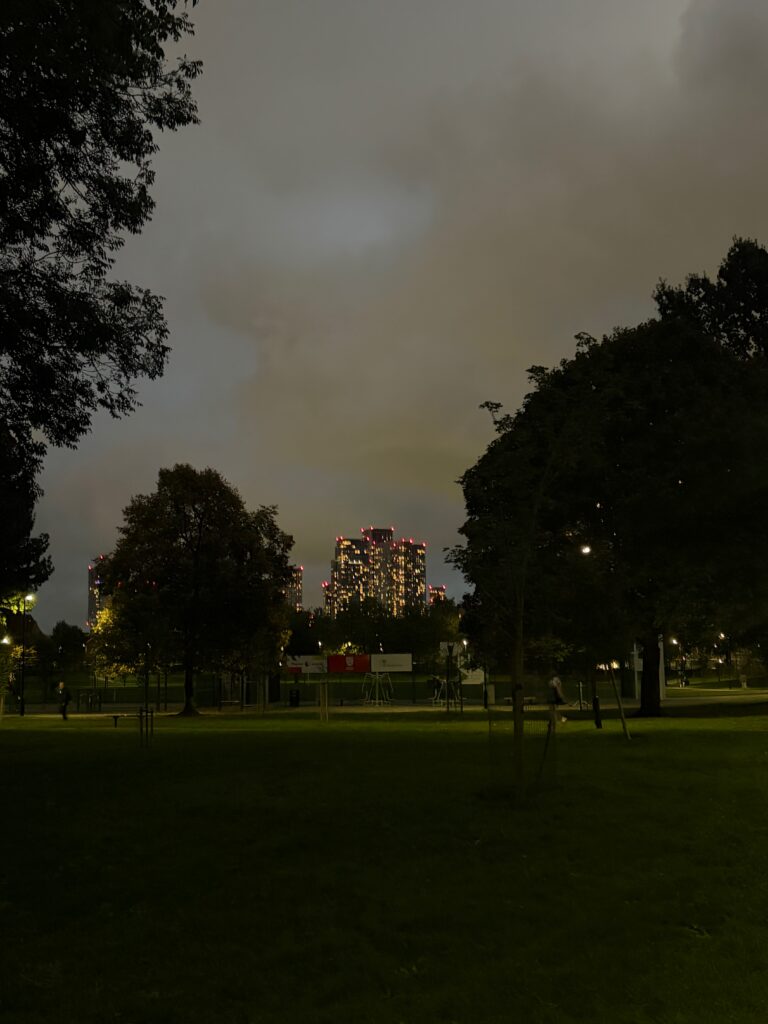
The concerns are reflected in wider research across Greater Manchester. A Walk Ride GM report on women’s and girls’ safety found that 68% of women, compared with 20% of men, felt unsafe going out alone after dark. Meanwhile, a GM4Women2028 survey of 1,622 women found that 68% avoid walking alone at night, while 41% take specific routes when travelling alone.
Another University of Salford student Aleena mhmd, 22, said she now stays on the bus for longer rather than getting off in quieter areas. She said she tries to remain in busier locations, including around Oxford Road.
“I have to worry about my safety… for longer parts of the day,” she said.
Street lighting plays a significant role in how comfortable she feels travelling alone.
“The more lit up a street is, the safer I feel. The darker the street, the less safe I feel.”
The concerns extend beyond those travelling by bus or walking. A student who drives to university said her route had remained the same, but walking to her car alone after dark can leave her feeling frightened.
She described the difference between travelling during the day, when more people are around, and the evenings, when streets can feel quieter. She also said she regularly checks whether someone is following her.
She says universities should consider measures such as on-site parking or a way for students to alert staff if they experience a problem during their commute.
For the first student, a past incident involving a group of children on scooters near The Broadwalk in Salford has also affected where she feels comfortable walking. She now avoids the area, although she stressed that she does not consider the whole of Salford unsafe and said she feels comfortable walking along the canal at night.
The experiences show how the clocks going back can have consequences beyond a change in daylight. For the women interviewed, darkness influences when they travel, which routes they take and whether they feel able to make journeys independently
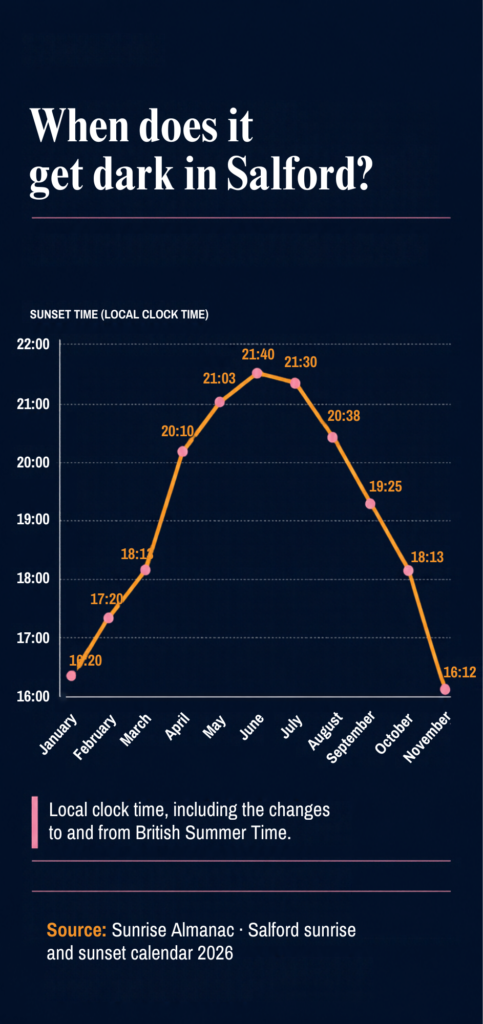
https://sunrisealmanac.com/uk/england/salford/2026/?utm
As sunset shifts from 9.40pm in June to 4.12pm in November, women travelling across Salford face significantly less daylight during their journeys home. The earlier sunsets can mean changing routes, relying on public transport or paying for alternative ways to get home.