
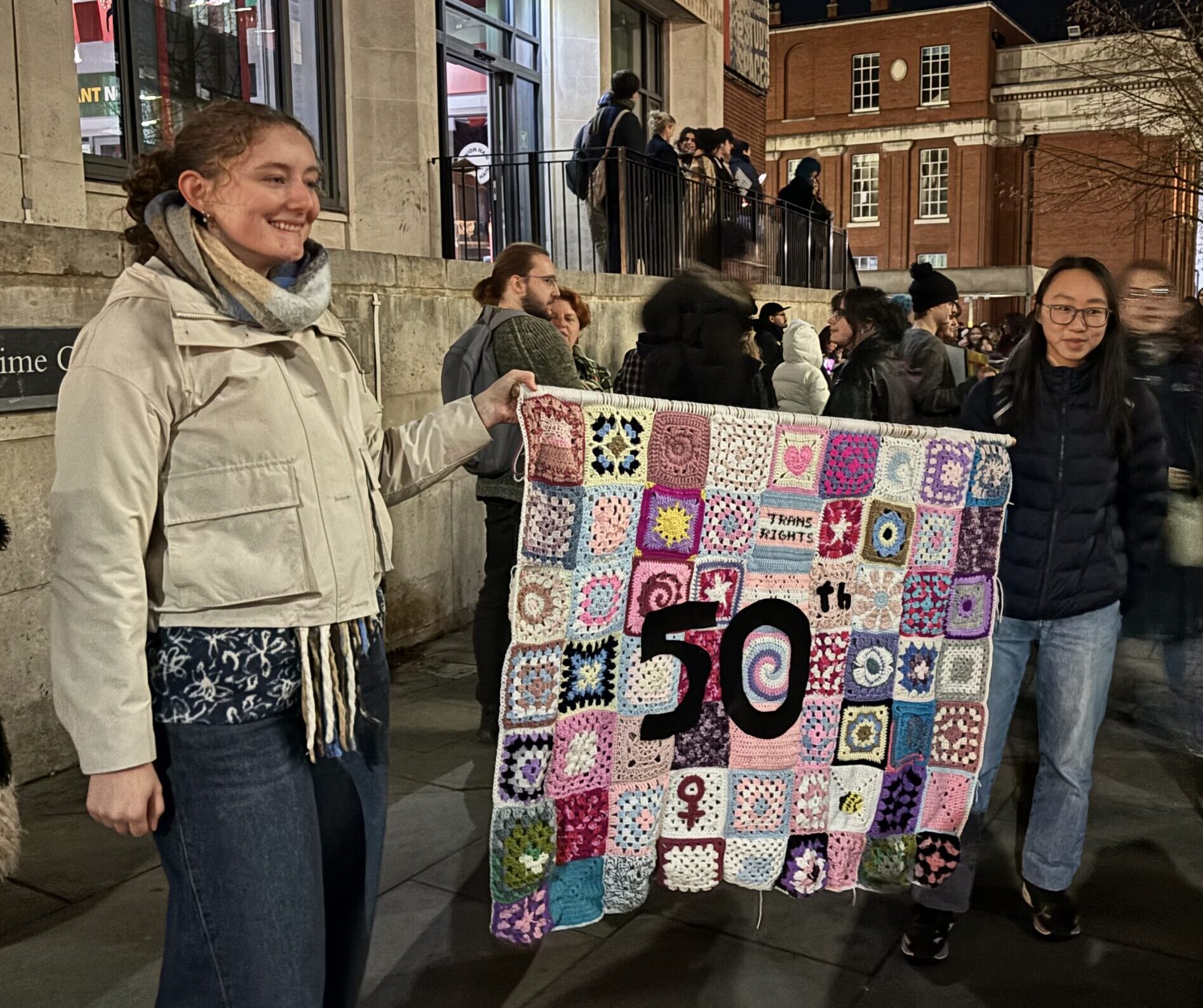
Reclaim the Night have been taking back the streets since 1970, protesting for an end to sexual violence and a want to ensure safety and autonomy for women and marginalised genders in Manchester.
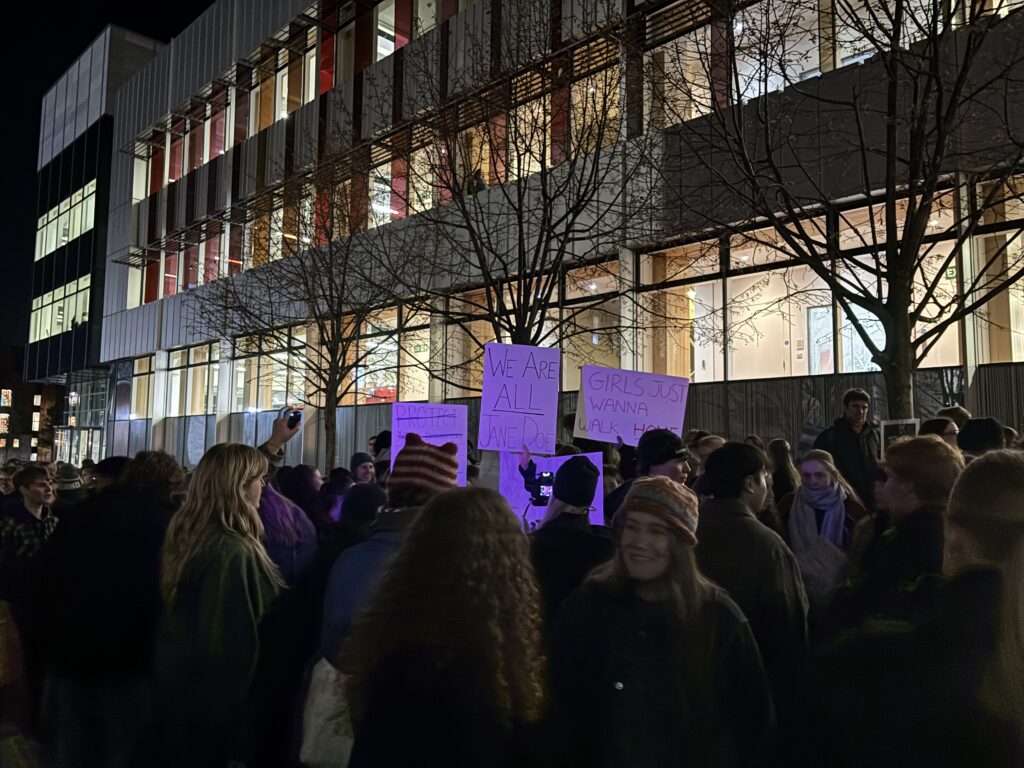
Photo by Amelia Snell
Hundreds marched through the streets of Manchester as Reclaim the Night returned for its 50th year. Students from Manchester unis rallied together to chant and protest the government and the patriarchy.
The campaign first marched on the 12th of November in Leeds in response to the string of the Yorkshire Ripper murders and restrictions and curfews replaced on women. It is said to have been inspired by a march in Brussels and was the “first documented incidence of an organised, urban, women’s night-time march against male violence against women.”
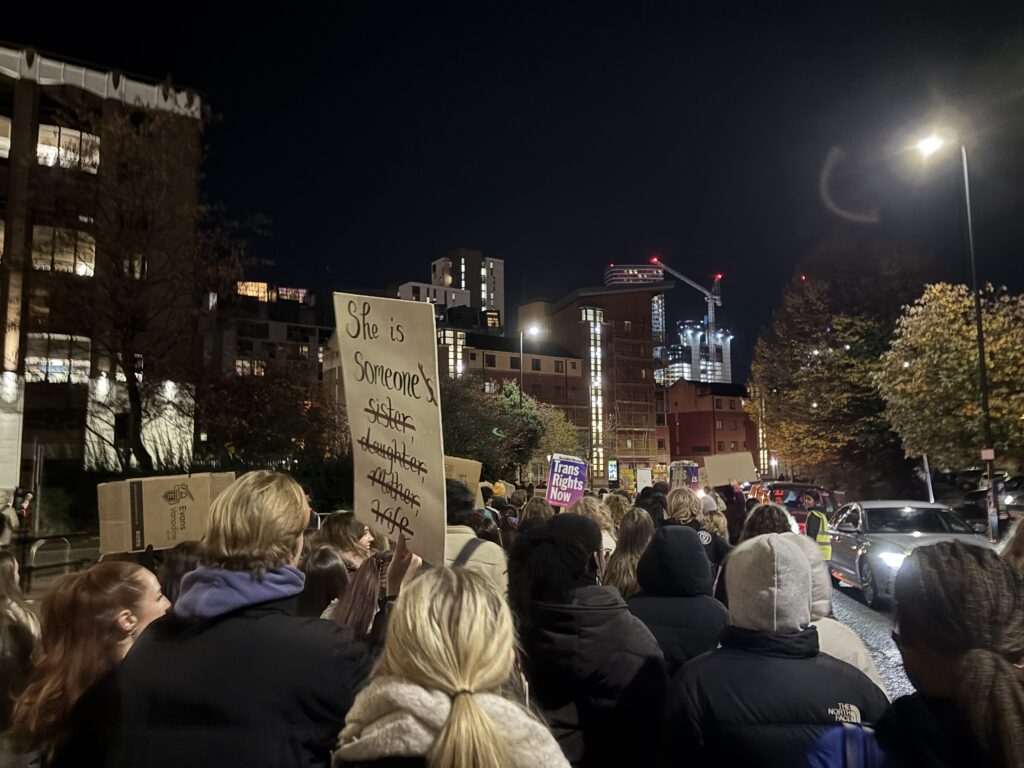
Photo by Amelia Snell
With the rise of gender-based violence in the UK, people are calling on Manchester City Council to make a change.
Olivia Clenton, a student at Manchester Metropolitan University, is in contact with Manchester City Council in hopes to implement safer procedures for women to get home, for example more lights on streets and alleyways around the city. She believes that it is “a cause that hasn’t go enough awareness,” and things like this are sometimes “forgotten about and brushed under the carpet.”
She says that having the march in the centre of the city and starting at the student union is so important because it helps educate the younger generation and spread awareness of the campaign and the issues it hopes to diminish one day.
The march started outside the University of Manchester student union at seven pm and ended at the Castlefield Bowl at eight thirty pm.
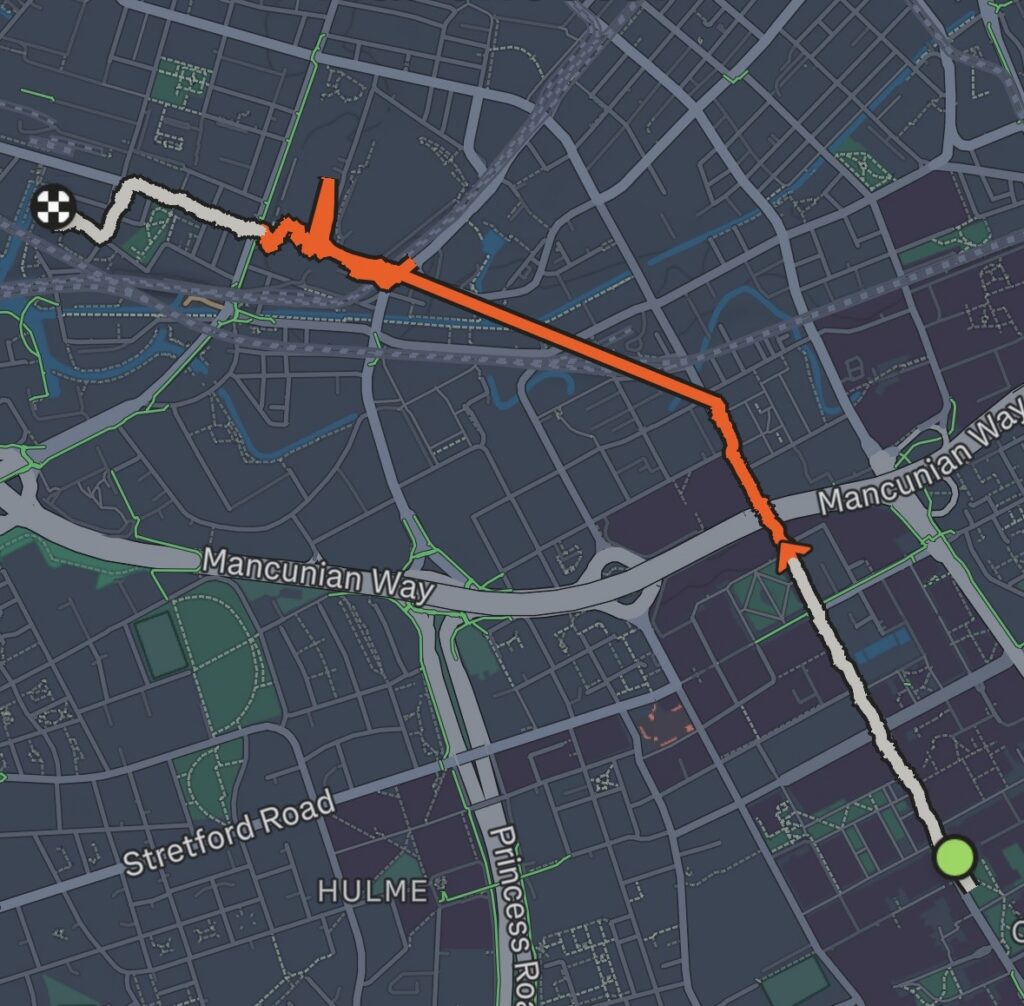
Route, recorded on Strava by Amelia Snell
At the bowl, powerful speeches were made to encourage the crowd to continue the push for change throughout the rest of the year. The campaign was described to be year-long rather than just one march, they are aiming to have meetings and contact the council in hopes for justice.
Sam Stretch, chair of the ‘Resist Rape Culture’ society at the Univeristy of Manchester made a speech in which he said; “Today we are marching not only for liberation and freedom from the patriarchal systems that oppress all of us, but to call for action for demands that haven’t been met.”
He demands for women and marginalised communities to be able to get home safely, trans solidarity, and zero tolerance policies to be implemented against all gender-based violence. Sam goes on to say “that education isn’t enough, these demands require more than a nod of acceptance… letters of apology do not equate to accountability.” He ends his speech saying that toxic masculinity and patriarchy tell men that sex is an accomplishment, which leads to coercion, harassment, and sexual assault- “This needs to be torn down.”
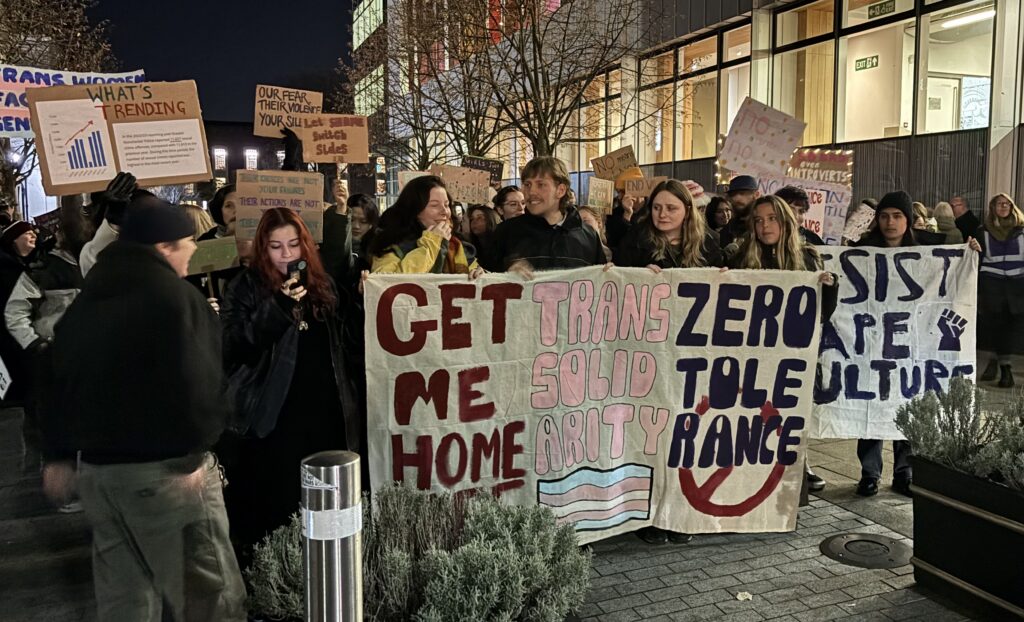
Sam Stretch, holding banner, 4th from the left. Photo by Amelia Snell
I asked Sam how he wants the campaign to impact the community. He hopes that the march is a stepping stone to get people involved in collective action. The successful turnout of the protest gives him hope that people will support the aims in pressuring the universities, Greater Manchester Police, and councils to change their actions. He adds that “men need to take accountability and responsibility for their behaviour; it is their job to educate themselves rather than rely on women and girls to teach them about sexual violence.
The Greater Manchester Police, Fire and Crime Panel report showed a decrease in gender-based violence statistics.
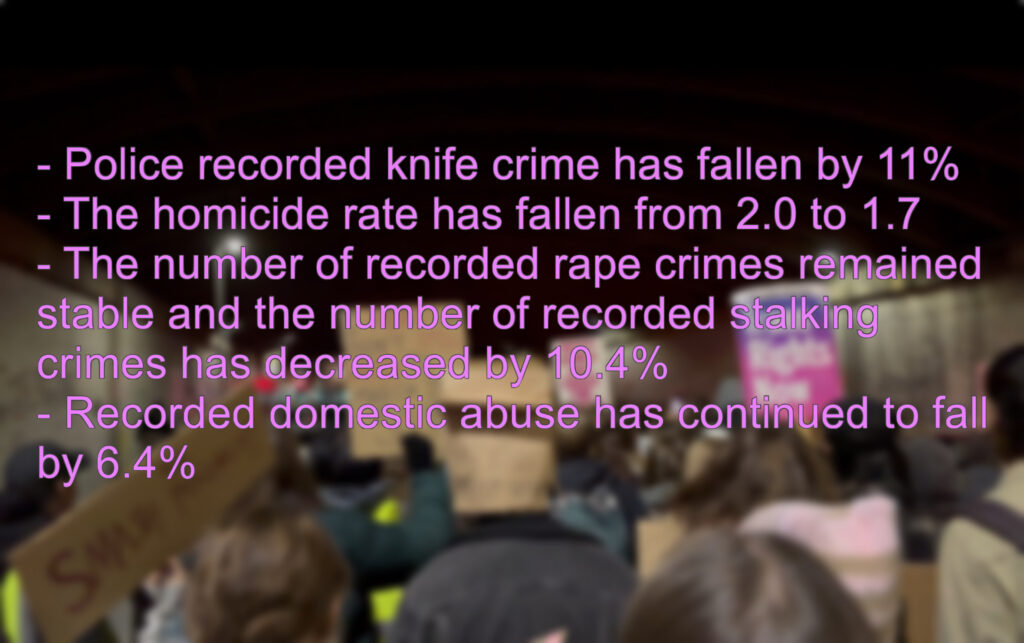
Despite this, gender-based violence and assault is still prevalent and a big issue, not just in Manchester but in the whole of the UK.
In 2021, Greater Manchester Combined Authority (GMCA) published an ambitious 100-year strategy to tackle gender-based violence across the city. They set out a “comprehensive programme of service delivery to enhance the safety of women and girls, while working to prevent gender-based violence from happening in the first place by challenging societal attitudes and inequalities that enable it.”
This includes addressing gender-based violence in educational institutions, helping people feel safe across transport networks, engaging Greater Manchester employers in preventing and responding to gender-based violence.
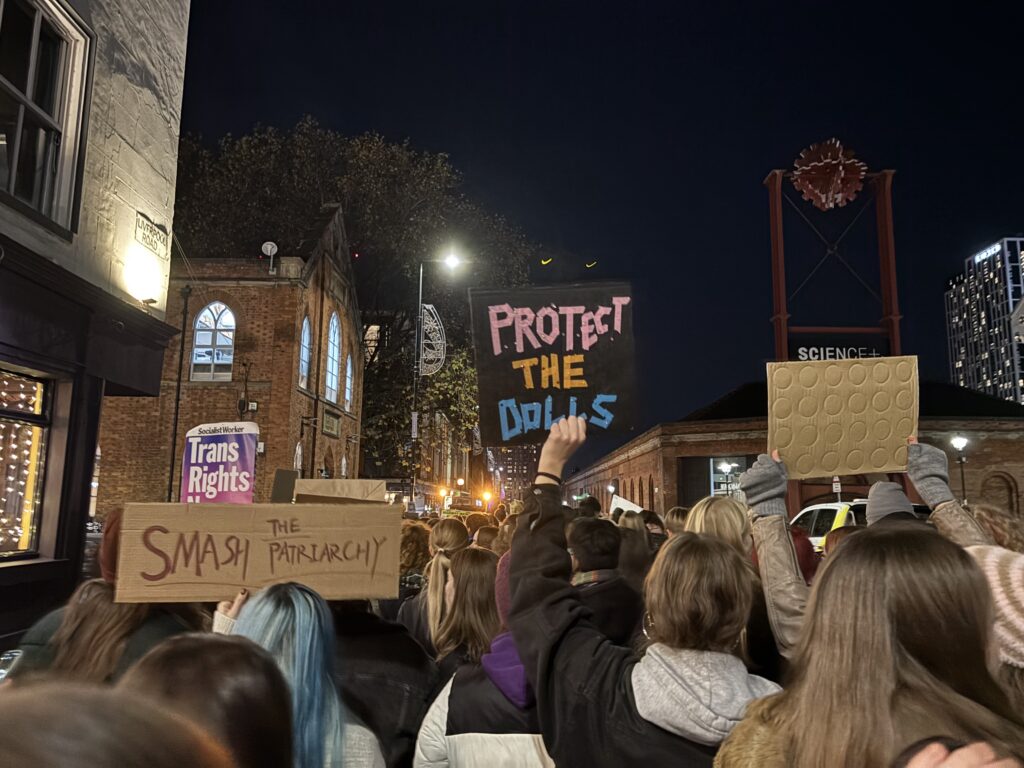
Photo by Amelia Snell
Many are disappointed that Reclaim the Night is still having to take place 50 years on from its first march back in the 1970’s. Although with this programme, more protests, and the public pressuring those in power to help make a change, there is hope for liberation and autonomy for women and marginalised genders.