
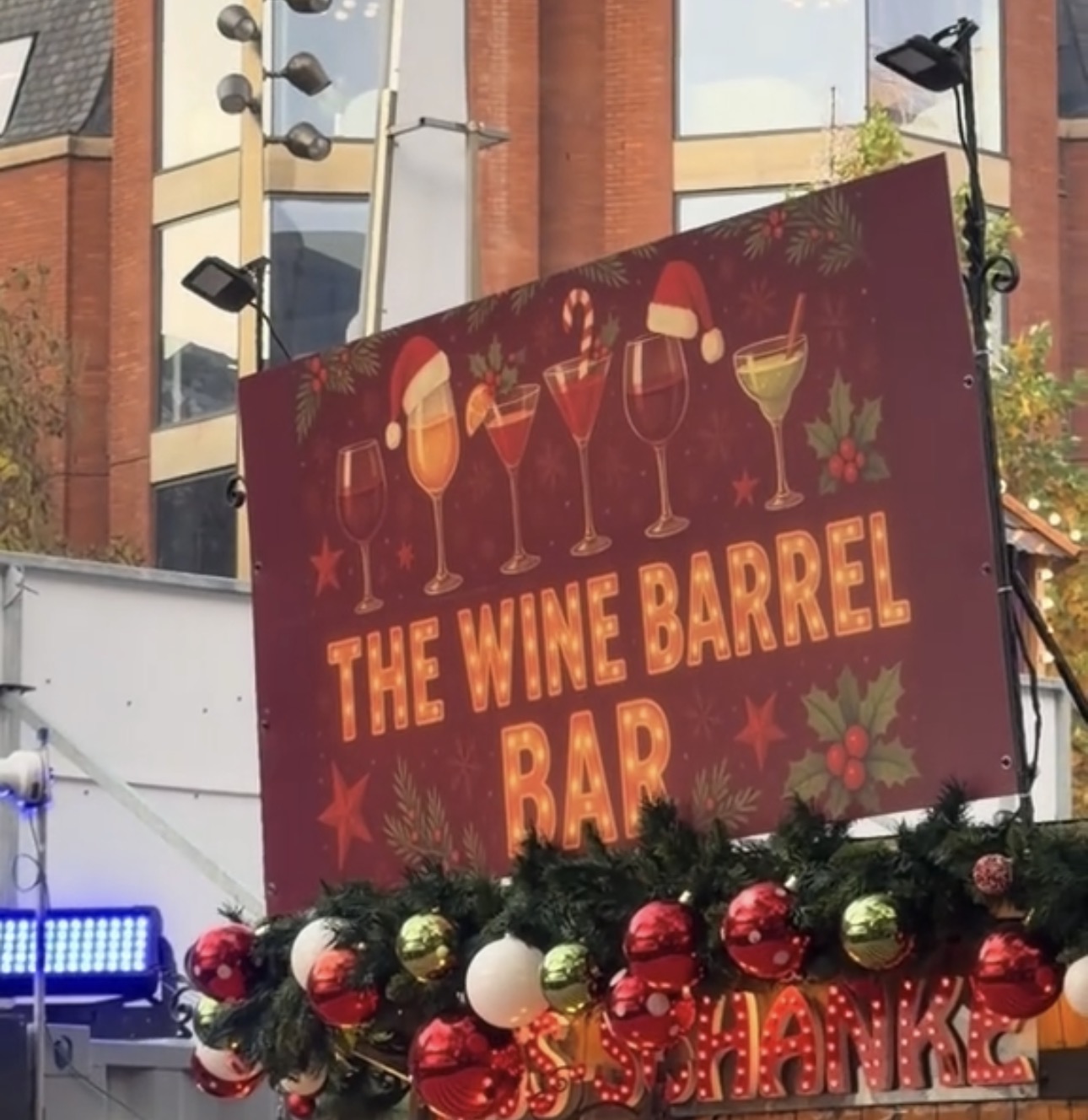
For thousands of people across Salford and Greater Manchester, a walk through the city centre’s wooden chalets is annual rite of passage. You expect the smells of roasting chestnuts and the sight of glowing fairy lights.
What visitors did not expect to see this November, however, was a wave of glossy and uncanny AI generated posters plastered across the stalls.

Since the Manchester Christmas markets officially launched across 10 city centre locations on 6th November, a heated debate has erupted both on the cobbled streets and across social media. Armed with smartphones and sharp eyes shoppers have been calling out traders for using artificial intelligence to advertise everything from currywurst and hotdogs to cookies, cakes and viral Dubai chocolate strawberries.
To many market goers, the trend has earned a blunt new nickname “AI Slop”.
A sour taste for festive shoppers
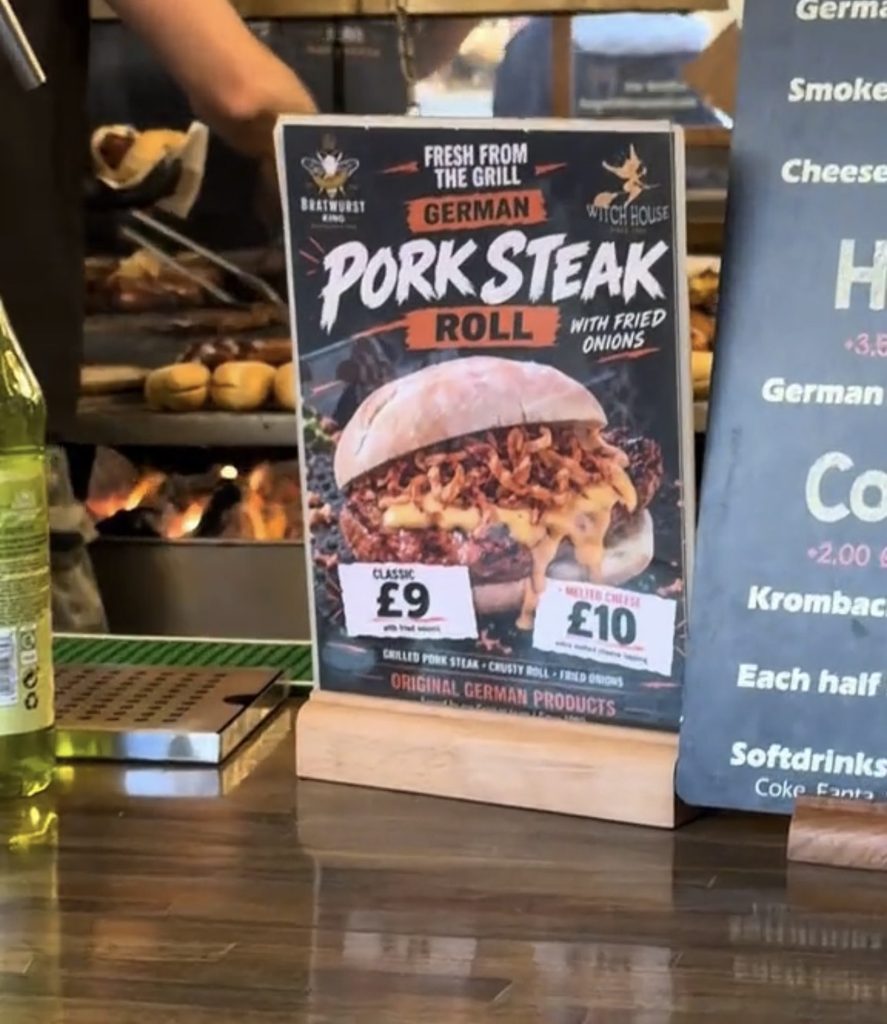
The backlash kicked off during the opening weekend when images of AI generated food banners began circulating online. While early posts initially noted that a German Bratwurst had remained steady at £8 this year, commenters quickly zeroed in on the stalls’ promotional artwork.
Look closely at several banners around Albert square, Market street and St Ann’s square, and the tell-tale signs of generative AI are not hard to miss. Sausages appear with odd and uniform textures, likened by online users to dry pot noodles, while fonts and background details blur into familiar digital patterns.
For visitors already weighing up the cost of a festive day out, the synthetic imagery has proved to be a major turn off. But, the frustration goes beyond aesthetics. For many punters, food photography at a street market serves a practical purpose, as you want to see what you are actually buying before you hand over your card to pay. When a banner displays an airbrushed, algorithm generated fantasy of a loaded hotdog or pastry, customers worry the real thing will fall short.
Online on social media apps like TikTok visitors have pleaded through videos saying “Food vendors, please for the love of all that is delicious, take actual pictures of your food.”
On the ground in Manchester, that sentiment is shared by shoppers actively changing where they spend their money. several visitors have noted that seeing the same repetitive AI graphics across multiple huts puts them off entirely, pushing them to seek out independent stalls that display genuine photographs of their produce or cook fresh food in plain sight.
“It changes the vibe”
Manchester and Salford boast a thriving community of illustrators, photographers and independent makers- many of whom rely on the winter season to showcase their work. To local creatives and craft traders, the sudden arrival of AI signage feels at odds with what a traditional Christmas market is supposed to represent.
Local digital illustrators have criticised the reliance on AI food posters as lazy and arguing that traders could easily take real photographs of the dishes they actually serve.
independent stallholders who spend months hand making their stock have also voiced fears that the trend could tarnish the reputation of the wider market. Craft traders selling handmade goods around the city centre have warned that synthetic branding cheapens the atmosphere and changes the vibe of the event.
There is growing concern among genuine artisans that if shoppers begin associating the markets with mass produced digital shortcuts, they may start assuming handmade crafts are artificial too.
Traders respond to backlash
Not everyone behind the counters sees the issue the same way. Running a temporary wooden chalet in Manchester city centre for six weeks comes with steep overheads, from pitch fees and staffing to printing costs.
Some stallholders have defended their locally printed signage, insisting the graphics are simply meant to look eye catching and do not mislead customers about what is on the menu. Others argue that hiring bespoke photographers or designers for a short seasonal run is not always financially viable.
However, the strength of the public reaction has already forced some operators to rethink their approach.
Major bratwurst operators across the city centre confirmed that 2026 was the first year they had experimented with AI imagery in their marketing. Following complaints from passers-by, some traders have already taken down several posters that did not accurately match their food.
While businesses have explained they cannot afford to reprint their entire seasonal displays mid-run, they have listened to customer feedback and plan to return to traditional photography next year.
What it means for the rest of the festive season
With the main markets running across the city centre until 22nd December, and hubs at Albert square and Cathedral Gardens staying open into the new year, the row shows little signs of cooling down. This years event has brought plenty of genuine festive highlights, including the return of the giant Zippy Santa to Albert square and a new food and drink zone at Lincoln Square.
Yet for a growing number of visitors, authenticity matters just as much as attractions. In s city proud of its creative roots and independent spirit, shoppers are sending a clear message this Christmas: when it comes to festive food and local culture, nothing beats the real thing.