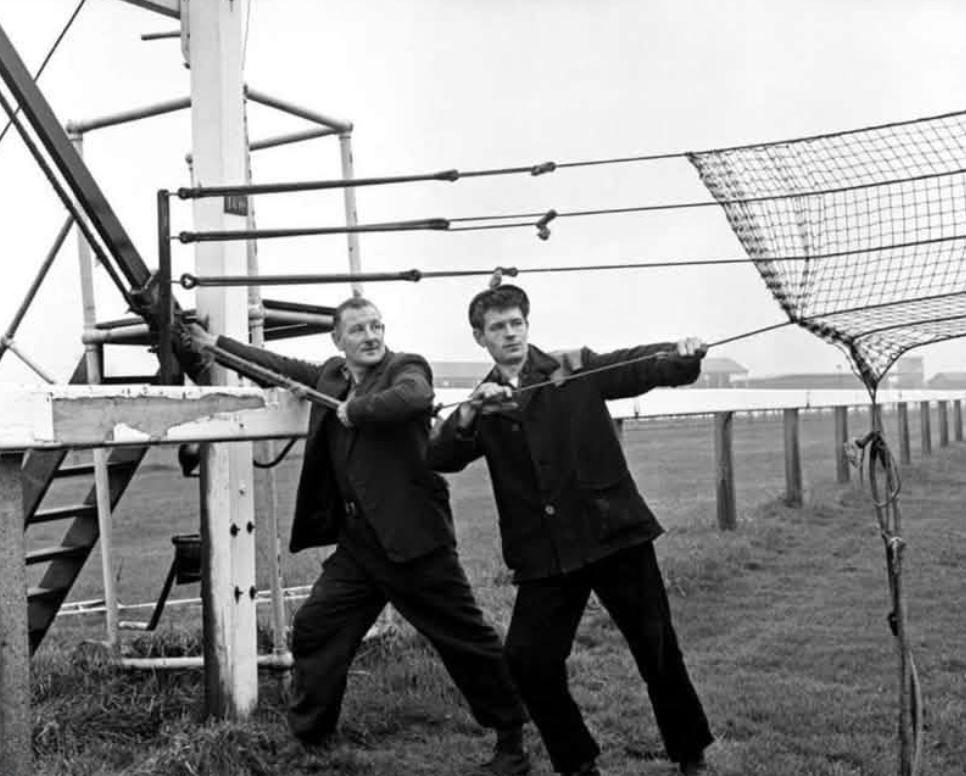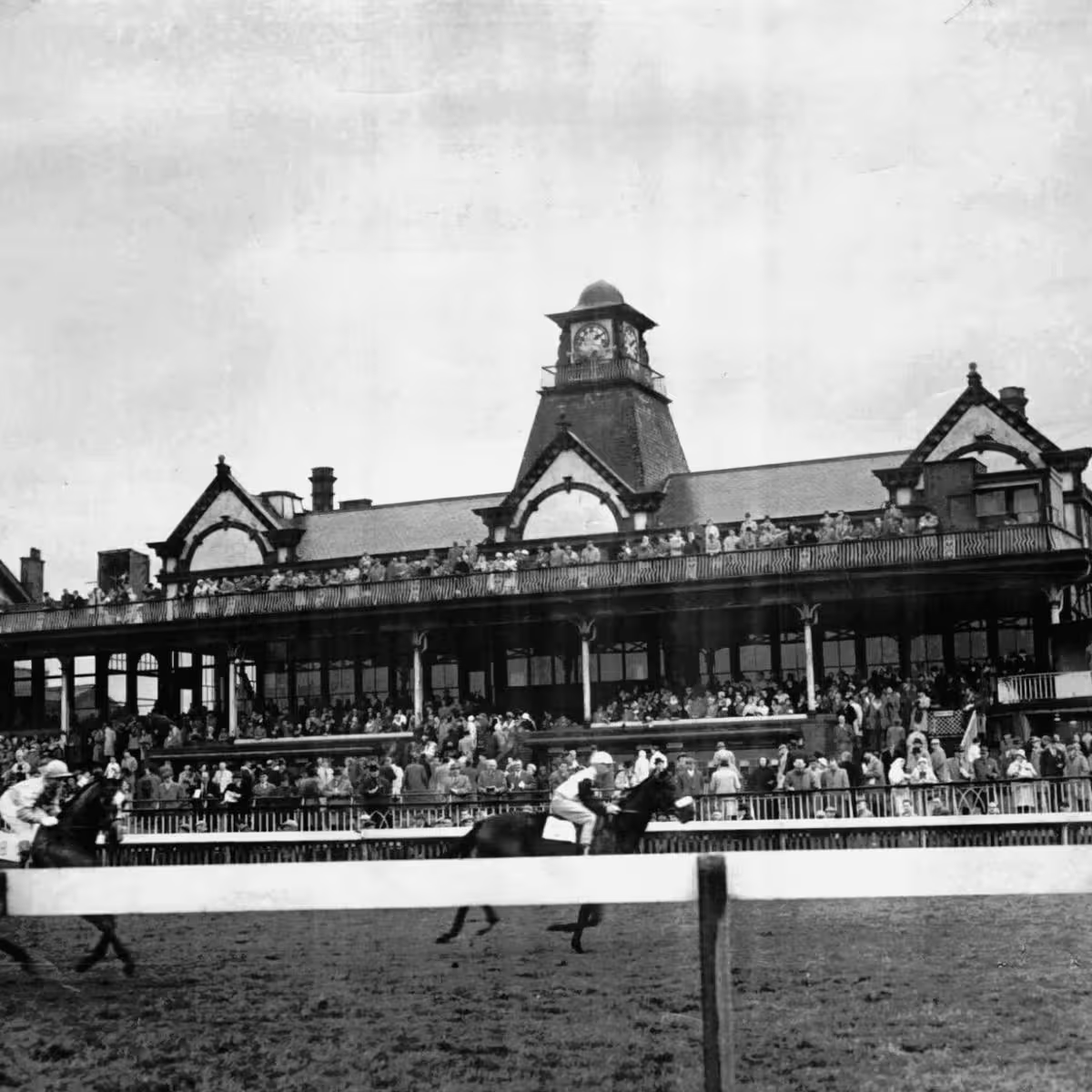
On Monday, it will be 63 years since the old Manchester Racecourse at Castle Irwell closed its doors for the last time.
Manchester racecourse has had its fair share of locations in the past 400 years.
Despite its name, each location of the legendary course has actually been within Salford.
The site of the final Manchester Racecourse at Castle Irwell was put up for sale in 1963, and was eventually bought by the University of Salford for £46,000 to construct a student village.
If you visit the site now, the original turnstiles and gateposts are still standing, reminding Salford of the great racecourse that once stood here.
Plans for a new racecourse in Manchester were submitted by Peel Holdings (The developers behind the Trafford Centre) in 2000, but fell through after being rejected by the government on green belt preservation and road safety concerns.
It seems unlikely we will ever see another racecourse in Manchester; however, the memory of what Mancunians once had will live on for generations.
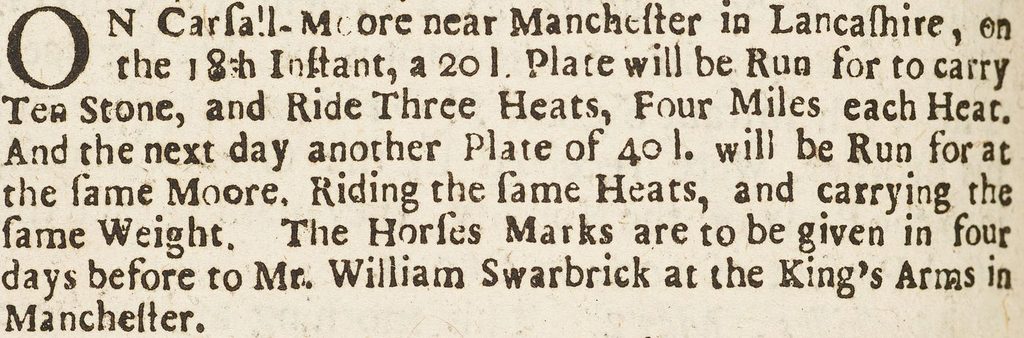
Situated at Kersal Moor, the course was in operation until 1847, when the lease was not renewed by the Manchester Racecourse Committee.
The racecourse then moved to Castle Irwell for the first time until 1867 and then to New Barnes in 1868.
The most notable Manchester racecourse, that some Mancunians will remember, was built at Castle Irwell and completed in 1902, replacing New Barnes, with the first piece of action taking place on Easter Weekend.
The racecourse was a big success for the area, with tram links being built in time for the grand opening, allowing residents from all around Manchester to attend a day at the races.
Tales beyond the grave uploaded a video to YouTube where he explained how the bridge across the river to the racecourse was guarded by “tall men” to stop people sneaking in to avoid paying.
This didn’t stop some people, though, as “people would find a shallow crossing of the River Irwell, strip off and wade across the river to avoid paying the one pence entrance fee.”
The number of people sneaking in via the bridge, and risking their lives crossing the river, got so bad that the army was called in to blow up the bridge to prevent people from crossing, where the middle section still stands today.
The first meeting was over jumps, a staple of northern racing, with the headline event being the Lancashire Steeplechase, a handicap race worth £1,750, which is around £279,000 in today’s money.
Jill Brogan, who went to school near the racecourse, told Quays News, ‘I used to love hearing the noise coming from there on race days when coming home from school’.
Graham Nelson, who also went to school near the racecourse, said that he “Used to watch the horses running around the course at lunchtime.”
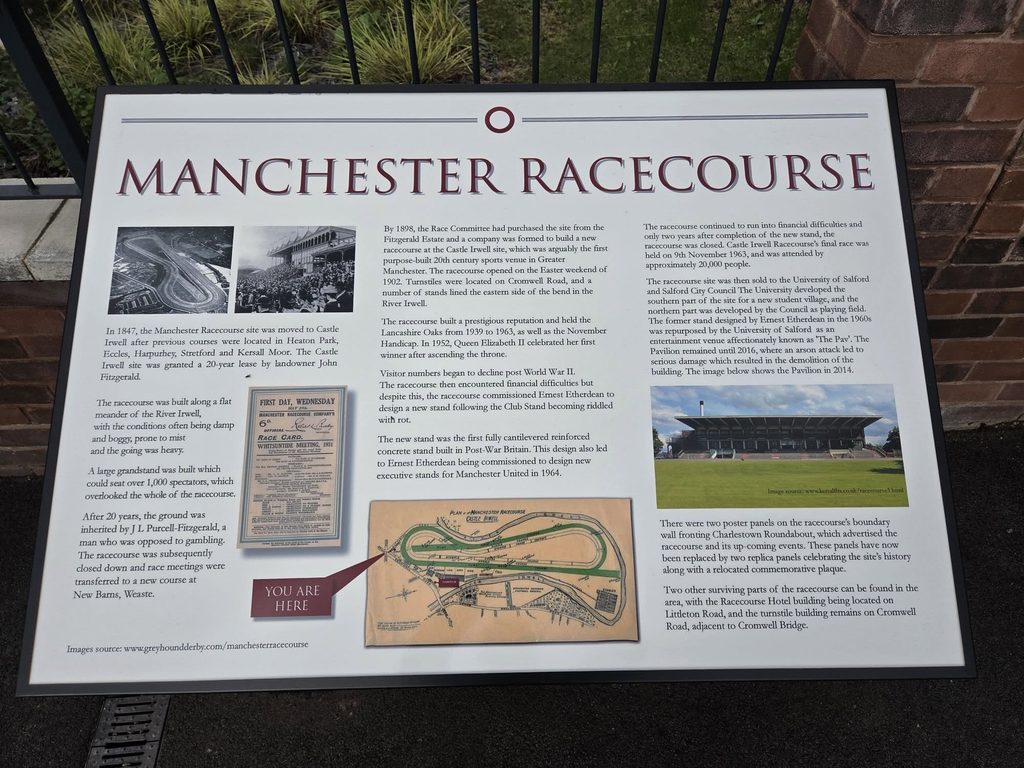
In 1952, the late Queen Elizabeth II won her first race as a racehorse owner, named Choir Boy, since being proclaimed Queen.
The Classic group one race, the St. Leger Stakes, was also held here in 1941 due to its home racecourse, Doncaster, being requisitioned by the military during the Second World War.
The troubles for Castle Irwell racecourse began in the 1960s when the club stand was found to be covered in rot.
This resulted in a new stand having to be built, which put a strain on the racecourse’s finances, due to it being one of the first fully cantilevered reinforced concrete stands in Britain.
Within two years of the stand being built, the strain on the course’s finances caused the shareholders to sell the site.
The last race at the great Manchester Racecourse was on the ninth of May 1963, the Goodbye Consolation Plate, won by none other than Lester Piggott OBE, attended by over 20,000 racegoers.